Environmental Chemistry and Toxicology

Research in Environmental Chemistry and Toxicology at Duke focuses on the fate and effects of natural and anthropogenic stressors, particularly chemicals, in the environment.

Ongoing research topics include:

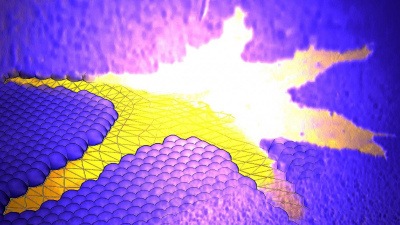
  • environmental implications of nanotechnology;
  • mechanisms underlying chemical fate and transport;
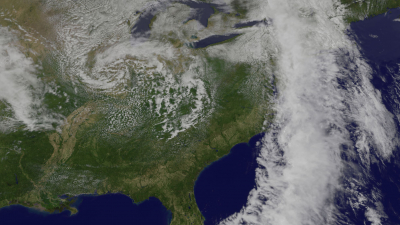
  • modeling of atmospheric transport and chemistry;
  • molecular mechanisms of toxicity and adaptation;
  • toxicogenomics;
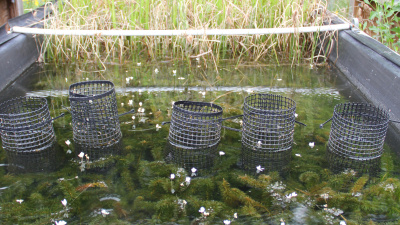
  • impacts on populations, communities and ecosystems; and
  • environmental risk assessment.

Opportunities for Graduate/Undergraduate Study

The department is not currently offering a graduate curriculum in environmental chemistry and toxicology, however, there are research opportunities with the faculty members below. The department's research efforts are highly interdisciplinary and collaborative. Undergraduate students have the opportunity to pursue a civil engineering/biomedical engineering dual major, with a focus on environmental and biomedical toxicology.

Environmental Chemistry & Toxicology Faculty

Professor (primary appt: Nicholas School of the Environment) and Director, Superfund Basic Research Center; Director, Integrated Toxicology Program.
Associate Professor (joint with Nicholas School of the Environment)
Environmental analytical chemistry and applications of high resolution mass spectrometry to trace organic contaminant analysis, environmental fate and effects of carbon nanomaterials in the aquatic environment, proteomics in environmental toxicology, and mechanisms of environmental endocrine...
Assistant Professor
Identifying genetic adaptation mechanisms resulting from anthropogenic contaminant exposure; developing biosensors capable of pathogen and contaminant detection in water and air; studying the impact of emerging contaminants on aquatic microbial ecology; and the development of novel techniques for...
Professor (primary appt: Nicholas School of the Environment)
Assistant Professor
Aquatic chemistry and geochemistry, trace element environmental chemistry, nanogeoscience, mercury biogeochemistry, water-particle surface processes.
Assistant Professor - Microbial Ecology of Marine Science and Conservation and Assistant Professor of Civil and Environmental Engineering
Assistant Professor (primary appt: Nicholas School of the Environment)
Associate Professor and Director of Graduate Studies
Environmental engineering, cyberinfrastructure networks, sensors, geotropospheric interactions, engineering systems optimization. Professor Jeffrey Peirce has been a member of the environmental engineering faculty in the Pratt School of Engineering at Duke University for 28 years. He received...
Assistant Professor
My research interests focus on improving the development of novel chemicals and engineered systems to include environmental objectives, along with traditional performance and cost metrics. In particular, I seek to (1) predict and mitigate environmental damage through physiochemical understanding of...
Assistant Professor of Environmental Chemistry (primary appt: Nicholas School of the Environment)
Professor (primary appt: Nicholas School of the Environment)
James L. Meriam Professor
Membrane processes, nanostructured materials, transport and fate of nanomaterials in the environment, colloidal and interfacial processes, and environmental systems analysis

Adjunct Environmental Chemistry & Toxicology Faculty

Adjunct Professor
Physical chemistry of organic, inorganic, and heterogeneous contaminants; physicochemical properties of surfaces; mechanisms of coagulation and flocculation; water and wastewater treatment
Adjunct Associate Professor
Relation between nanostructure of materials and their reactivity and toxicity. Characterization of the structure of ultra-small (colloids and molecular clusters), and/or amorphous and highly divided materials down to the molecular scale.
Adjunct Professor of Engineering Ethics
Conducts measurement and modeling research in environmental systems, including tracer studies, development of pollution collection devices, and biosystem engineering.